
The East Hall (also known as “The Throne Room”)
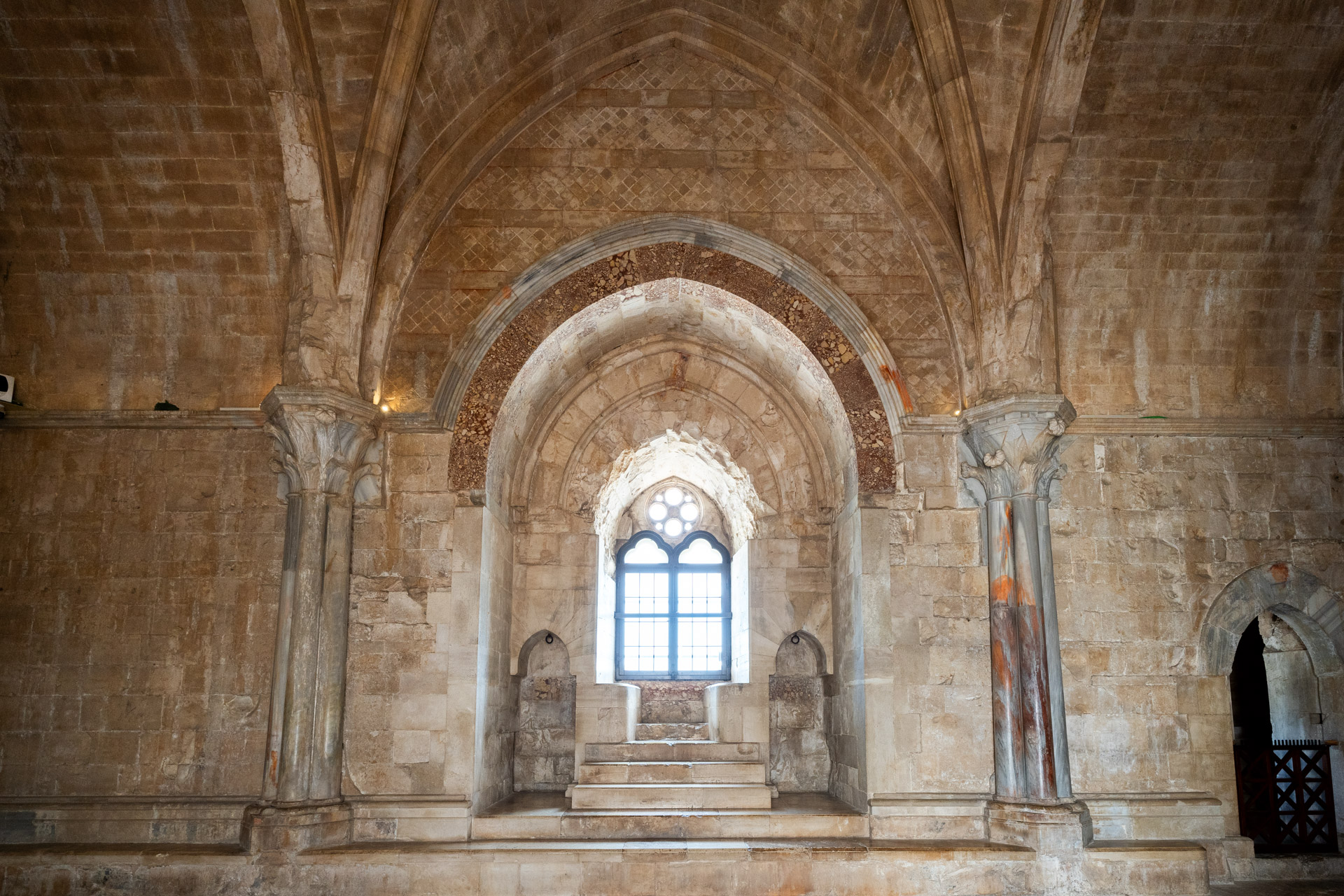
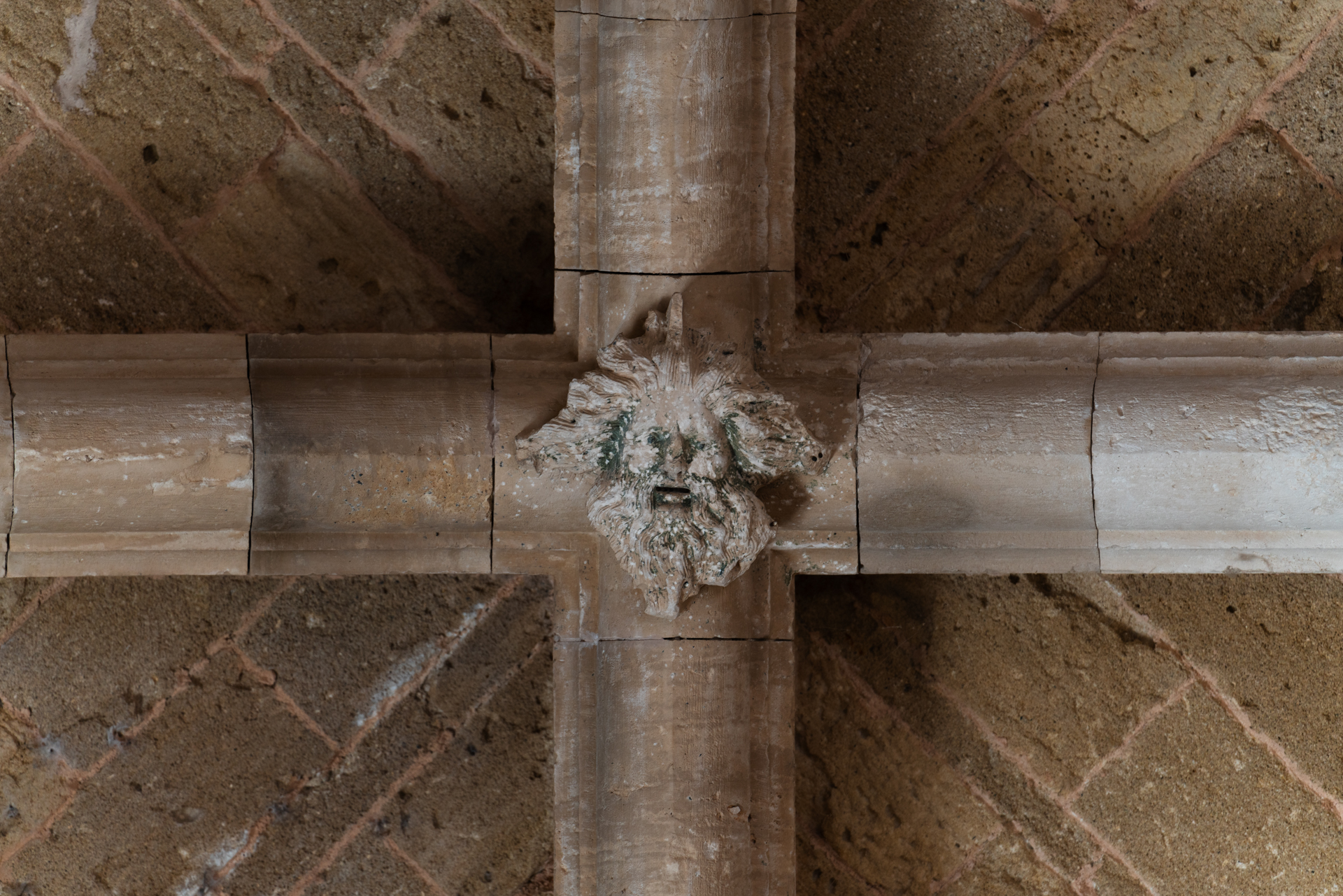
Although the East Hall is traditionally called the "throne room," it is not known if it ever hosted such a symbol of power. Perhaps this name derives from the assimilation of the system of steps to a seat, depending on the complex structure of the underlying portal with portcullis. In any case, it should be noted that there is even a lack of evidence for Emperor Frederick II of Swabia's actual stay at Castel del Monte. The hall’s position above the main portal allowed for the manipulation of the castle's access portcullis through the two niches that flank the window. With its mullioned window, the hall faces east to receive the morning light, while a French door overlooks the inner courtyard and a blind wall separates it from the first hall, with which it communicates through an oculus. From the keystone, a striking bearded face—a philosopher, an astrologer, a magician, or perhaps a faun—observes silently.
The hall lacks a fireplace and restroom facilities. Its significant role in the dynamics of the castle has sometimes led to it being considered both a space for public or representational functions and the seat of the castle chapel (an analogy, albeit an uncertain one, with the castles of Gravina and Trani).
Audio Guide