
Frederick II: life in history – 2
The success of the “peaceful crusade” with a diplomatic agreement allowing Christian pilgrims to access Jerusalem for 10 years, 5 months and 40 days, did not immediately lead to the lifting of the excommunication: this would only happen in 1230, after a tiring war of reconquest of the Kingdom of Sicily, which in the meantime had been invaded by papal troops.
In 1235 the Emperor married Isabella of England, who died in childbirth six years later. From their union Margherita and Carlotto were born (later renamed Enrico after the death in prison of his eponymous eldest brother, who had rebelled against his father). In addition to his three legitimate wives, Frederick loved Bianca Lancia, perhaps married in articulo mortis, union from which his favorite son Manfredi was born, future last ruler of the Swabian dynasty.
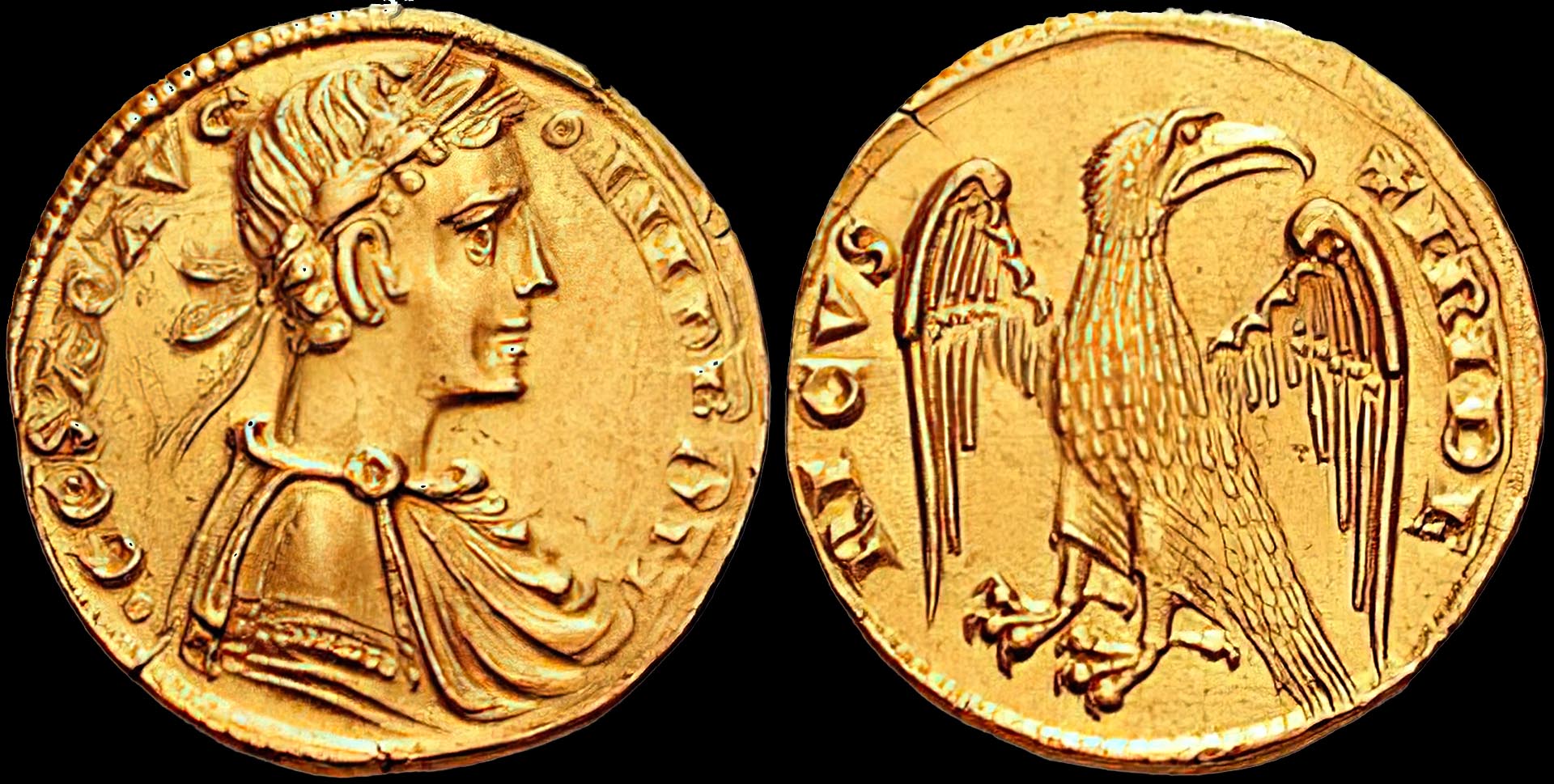
In his lifetime, Frederick II was king of Sicily from 1198 to 1250, of Germany from 1215 to 1250, of Jerusalem from 1225 to 1228 (even if the title was technically held by his son Conrad) and Emperor from 1220 to 1250.
His traveling court hosted the most illustrious Christian, Arab and Jewish scientists and intellectuals of the time. He was a lover of literature, philosophy, art and music, which he also practiced personally. In 1224 he founded in Naples the first "state university” in history and in 1231 promulgated a body of laws that would remain in force for centuries.
Frederick died in the castle of Fiorentino, in Puglia, on December 13th 1250. His body was moved to Palermo and placed in the Cathedral inside a red porphyry sarcophagus that his grandfather Ruggero had chosen for himself many years earlier.
Federico's multifaceted and charismatic personality fueled myths and legends and exerted, for better or for worse, a great influence on late Middle Ages Europe, so much so that he received from a contemporary chronicler (Matteo Paris) the enigmatic and ambiguous nickname of «Stupor Mundi», or «Stupor of the World».
Audio Guide